7 Cambodian Festivals: Your Must-See Guide
Imagine a country where ancient traditions burst into life with vibrant colors, rhythmic music, and heartfelt celebrations. This is Cambodia, a nation rich in history and culture. Experiencing Cambodian festivals offers a unique window into the heart and soul of its people. These celebrations are deeply rooted in Khmer culture and Theravada Buddhism, showcasing centuries-old customs. For anyone planning a trip, aligning your visit with one of these spectacular events can transform a simple holiday into an unforgettable cultural adventure. Cambodia welcomed 6.7 million international tourists in 2024, a 22.9% increase from 2023, surpassing even pre-pandemic levels. The tourism sector generated approximately $3.6 billion in revenue in 2024, proving Cambodia’s growing appeal. [1]
This article will guide you through seven essential Cambodian festivals you absolutely must see. You will learn about their significance, the unique activities involved, and why they are so crucial to the Cambodian people. Prepare to immerse yourself in the joyful spirit of these traditional Cambodian holidays.
Why Experience Cambodian Festivals?
Cambodian festivals are more than just public holidays; they are vital expressions of national identity. They offer a chance to witness the strong community bonds and deep spiritual devotion of the Khmer people. Each festival tells a story, whether it’s about honoring ancestors, celebrating the harvest, or reflecting on Buddhist teachings. These cultural events provide unparalleled opportunities for travelers to connect with local customs. You can participate in traditional games, observe ancient rituals, and taste special festive foods. It’s truly the best time to travel Cambodia weather crowds festivals when the country comes alive with celebration. Many visitors seek out festivals in Siem Reap and Phnom Penh, though events happen across the nation. Therefore, understanding the Cambodian holiday calendar helps you plan an enriching journey. For more travel tips, consider our first-time Cambodia travel guide ultimate beginners plan.
Cambodia’s rich cultural heritage is clearly evident in these celebrations. Theravada Buddhism plays a central role in many festivals, guiding practices and beliefs. [14] The Ministry of Tourism Cambodia highlights these festivities as key attractions, inviting visitors to experience the country’s unique charm. [10]
1. Khmer New Year (Choul Chnam Thmey): The Heart of Cambodian Celebrations
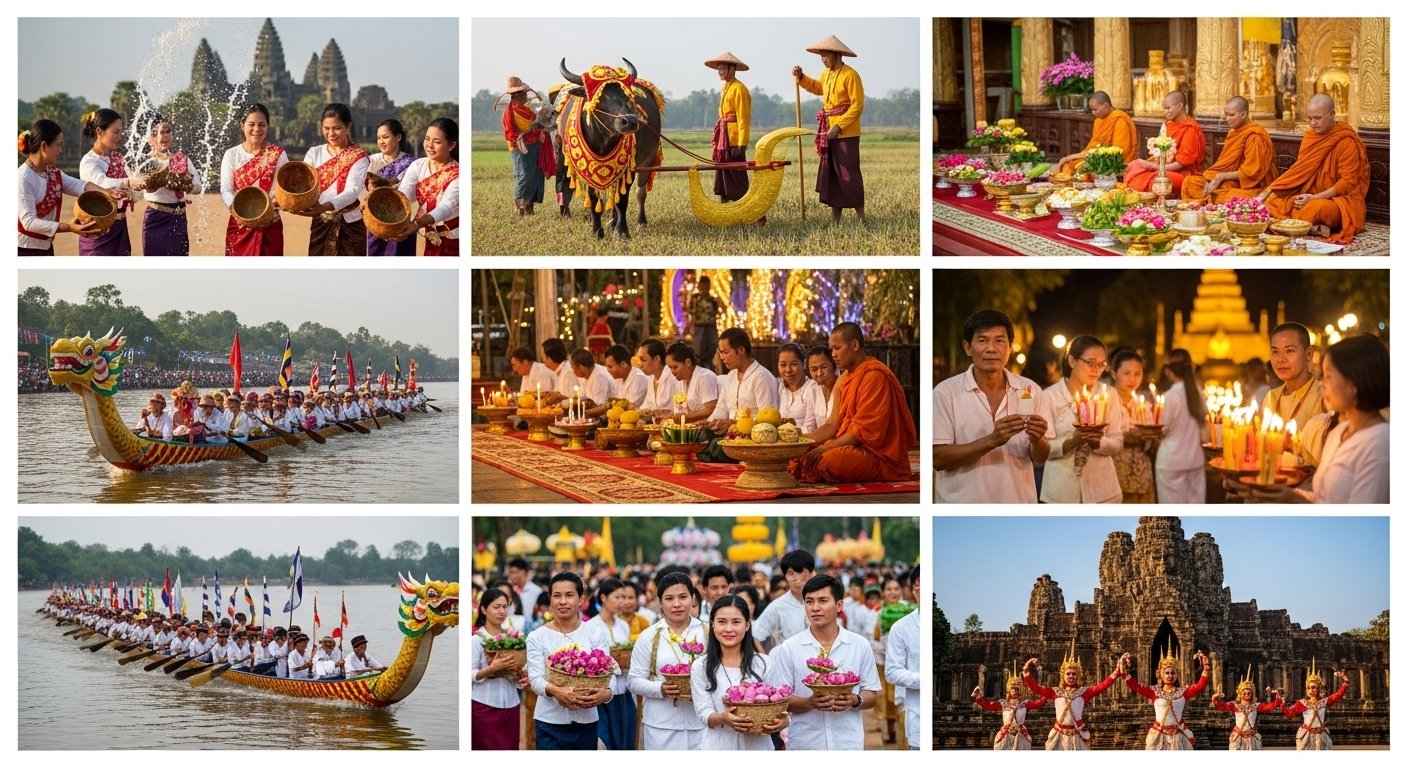
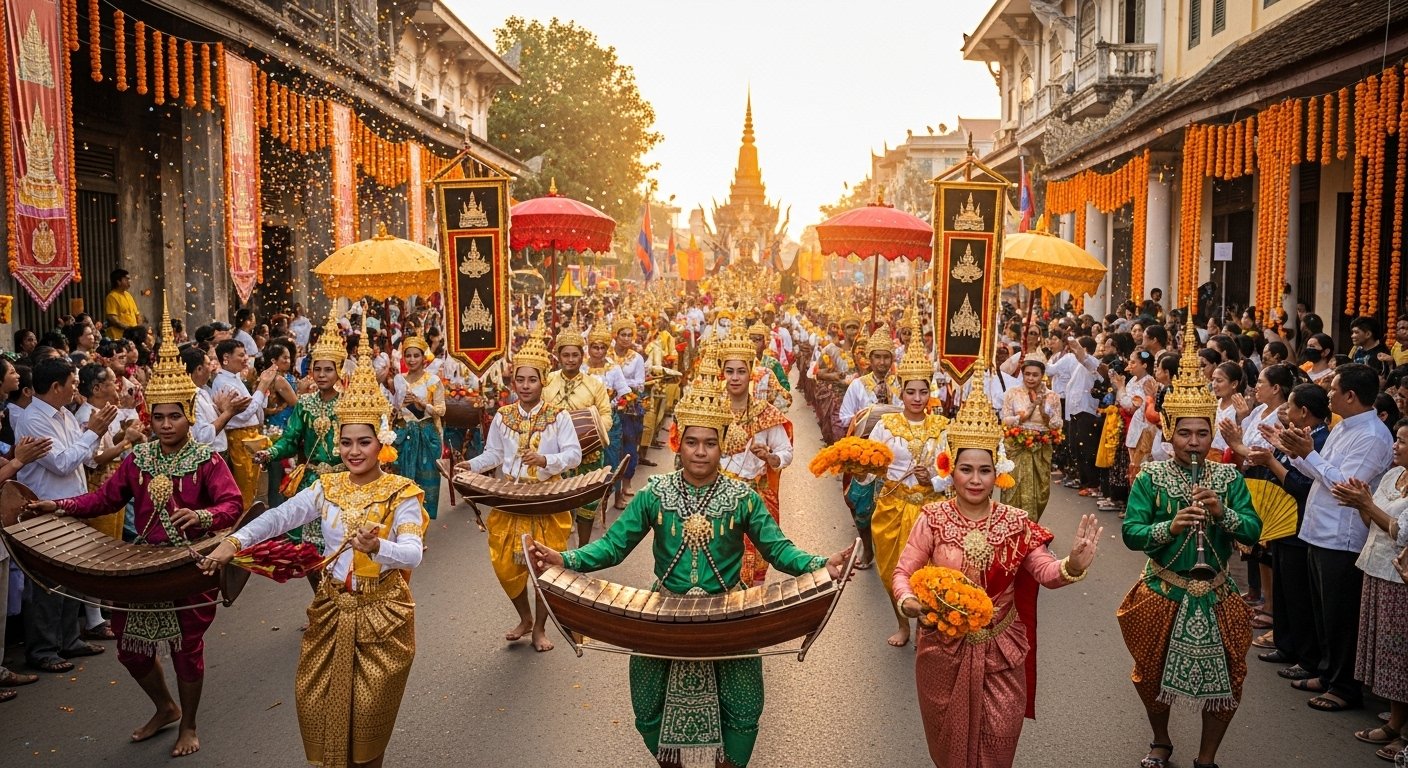
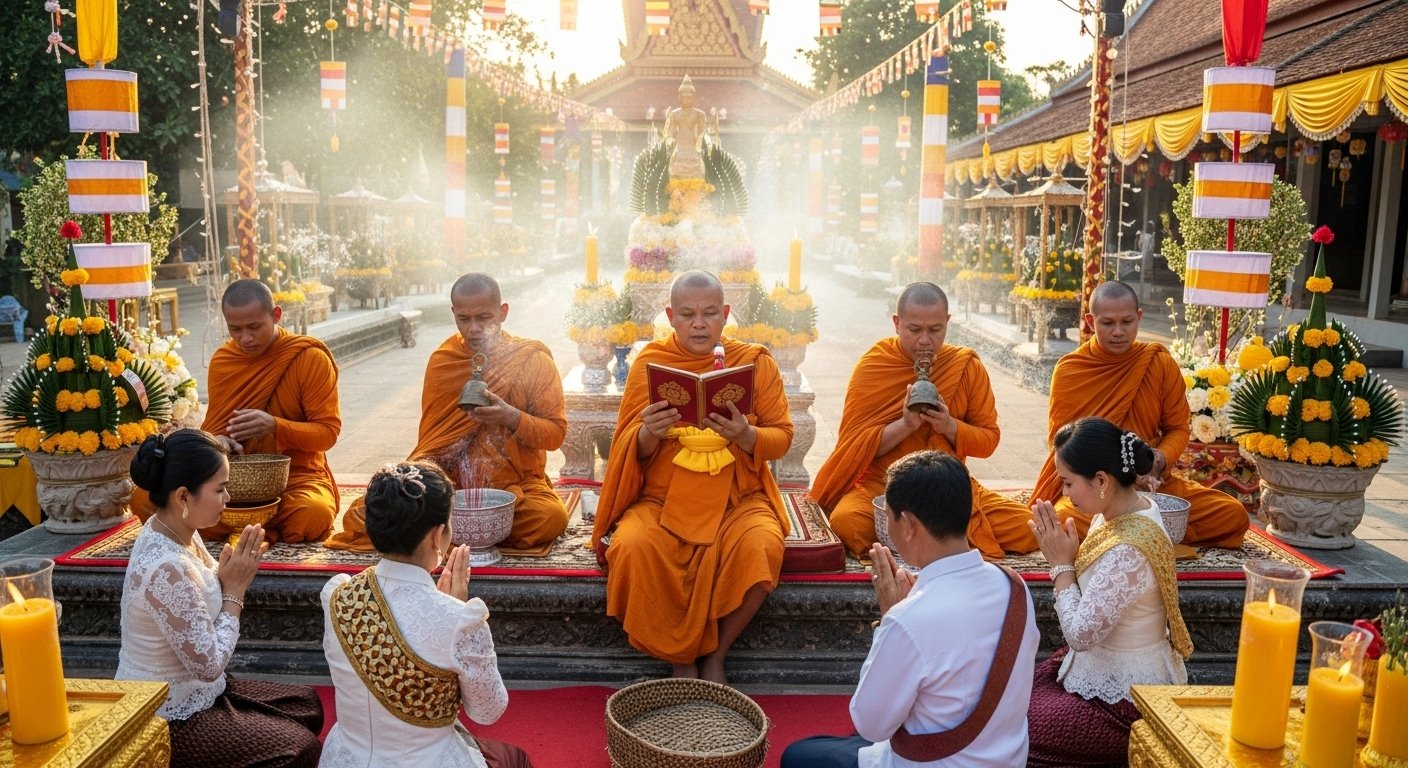
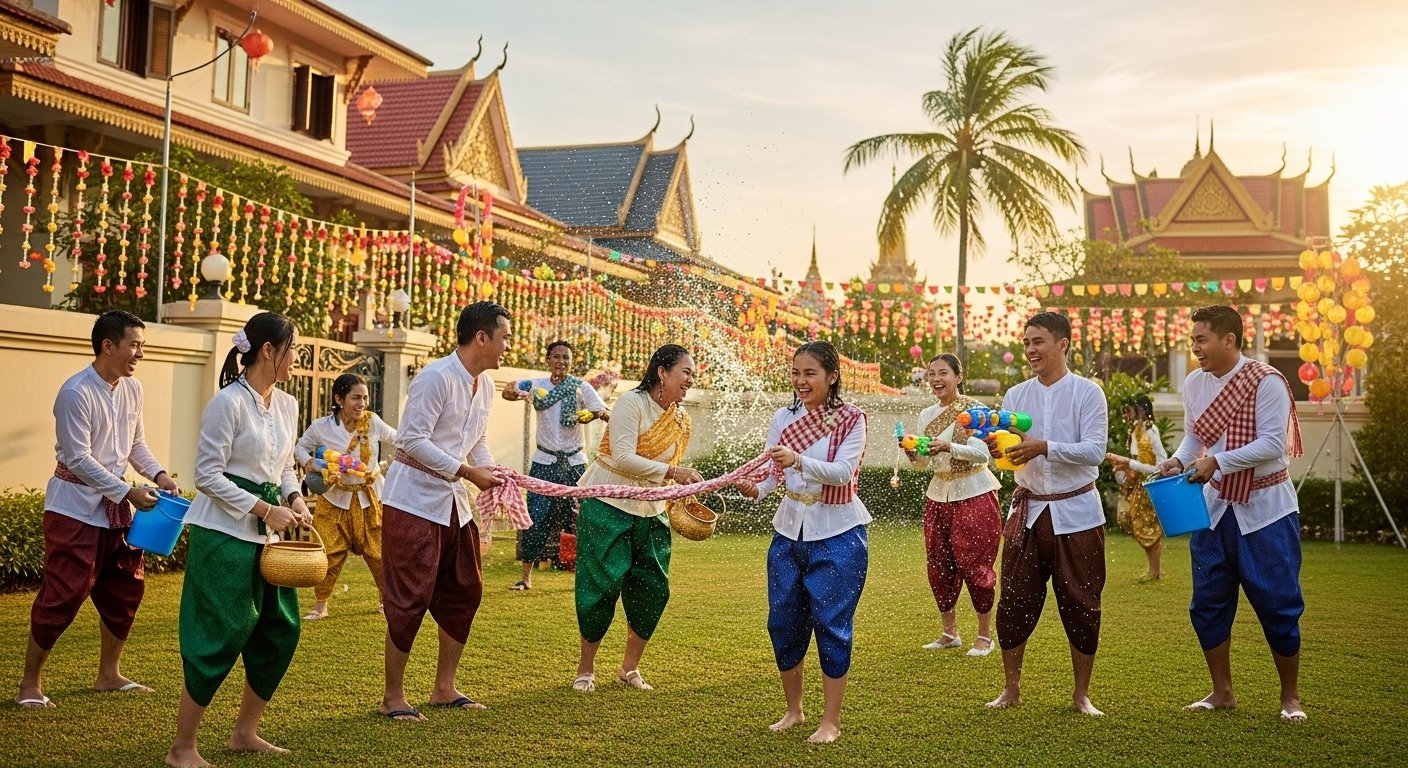
What is the biggest festival in Cambodia? Many people consider Khmer New Year, known as Choul Chnam Thmey, to be Cambodia’s most significant celebration. This festival marks the end of the harvest season and welcomes the new year according to the traditional Khmer calendar. Typically, it falls in mid-April and lasts for three joyful days. During this period, families gather, homes are meticulously cleaned, and people visit pagodas to make offerings. It is a time for renewal and good fortune. You will find traditional games played in villages and water being playfully splashed, symbolizing cleansing and new beginnings. [3, 7]
How Cambodians Celebrate
The first day, called Moha Sangkran, involves welcoming the New Year Angel. People light candles and burn incense, offering fruits and drinks to honor the new divinity. The second day, Wanabat, focuses on charity. Families donate to the poor and visit temples to offer food to monks. Many also build sand mounds on pagoda grounds. The third day, Leung Sakk, is for cleansing. Buddha statues are bathed with perfumed water. Elders receive special blessings from their children. This tradition brings health, happiness, and long life to everyone.
Planning Your Visit
Khmer New Year traditions are vibrant across the country. Major cities like Phnom Penh and Siem Reap host large public celebrations. However, rural areas offer a more intimate experience, allowing you to witness authentic local customs. Travelers should book accommodations and transport well in advance, as many Cambodians travel home to be with their families. This results in busy transport hubs. The festival dates shift slightly each year based on the lunar calendar, so checking the exact Water festival Cambodia dates or Khmer New Year dates is crucial. [4]
2. Bon Om Touk (Water Festival): Cambodia’s Grandest Spectacle
What is the Cambodian Water Festival? Bon Om Touk, or the Water Festival, is arguably Cambodia’s most spectacular and widely attended event. This grand festival celebrates a unique natural phenomenon: the reversal of the flow between the Mekong River and the Tonle Sap River. It also marks the end of the rainy season and the beginning of the fishing season. An estimated five million visitors attended Cambodia’s Water Festival in Phnom Penh at the end of November 2023. [1]
The Thrilling Boat Races
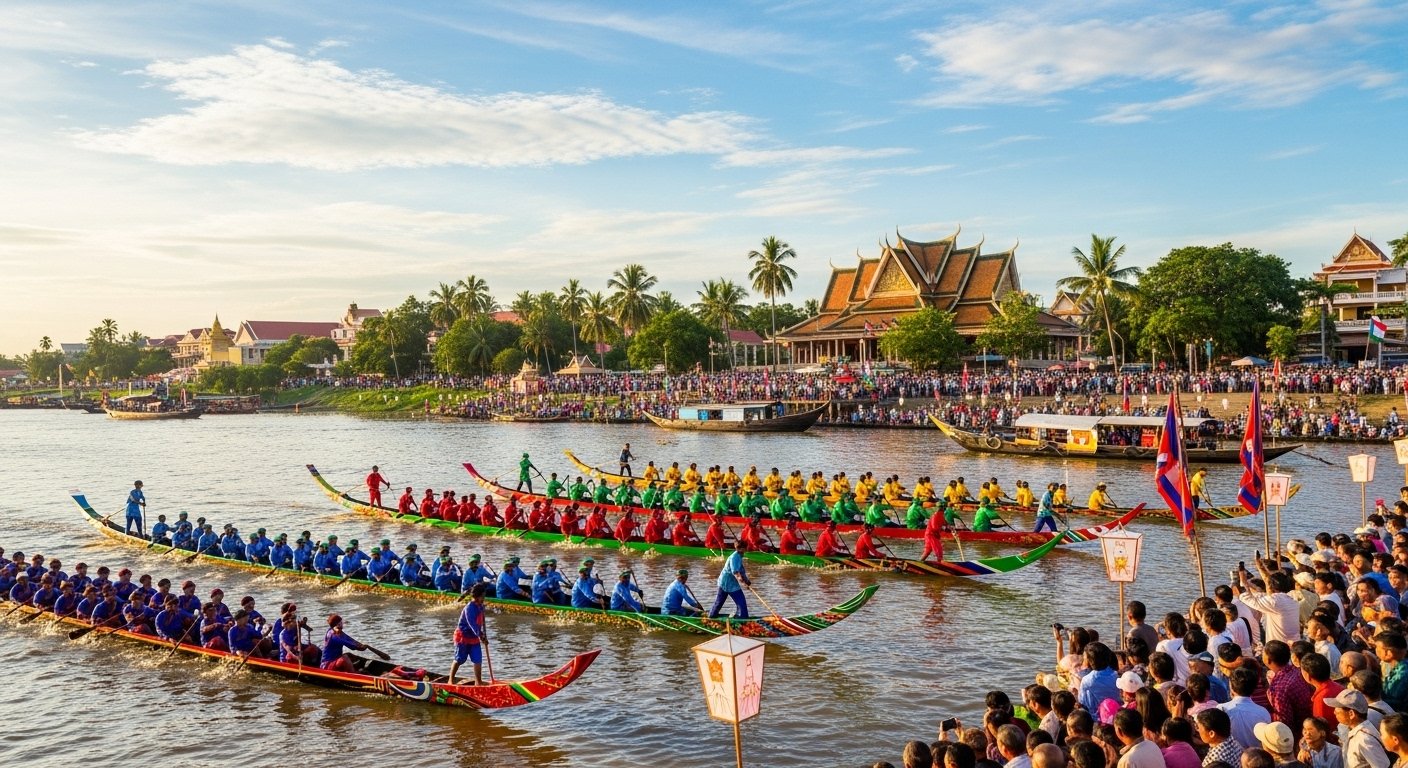
The centerpiece of Bon Om Touk is the exhilarating longboat races held on the Tonle Sap River, especially in Phnom Penh. Teams of rowers, often from different provinces, compete in elaborately decorated boats. These races are not just sporting events; they honor the strength of the Khmer navy from the Angkorian era. Huge crowds line the riverbanks, cheering enthusiastically for their favorite teams. The atmosphere is electric, filled with excitement and national pride. Moreover, the boat racing event was historically a battle training conducted by naval forces. [5]
Riverine Festivities
As dusk falls, the river transforms into a dazzling display of light. Illuminated boats, known as `Loy Pratip`, parade along the water, each one representing a government ministry or institution. The festival also features a `Sampeas Preah Khe`, or moon salutation ceremony. People make offerings to the moon, believed to bring good fortune. Eating `Ork Ambok`, a special flattened rice dish with banana or coconut juice, is another cherished tradition during this time. The combination of races, parades, and traditional snacks makes Bon Om Touk a feast for the senses.
3. Pchum Ben: A Time for Ancestral Respect
What is Pchum Ben? Pchum Ben is a significant 15-day Cambodian Buddhist festival, culminating in a three-day national holiday in September or October. It is often referred to as Ancestor’s Day or the Festival of the Dead. During this period, Cambodians pay their respects to up to seven generations of deceased relatives. It is believed that the gates of hell open during this time, allowing the spirits of ancestors to roam the earth. Over 1.92 million tourists, including 27,000 foreigners, visited Cambodian destinations during the Pchum Ben festival from October 13 to 15, 2023. [1]
Honoring the Departed
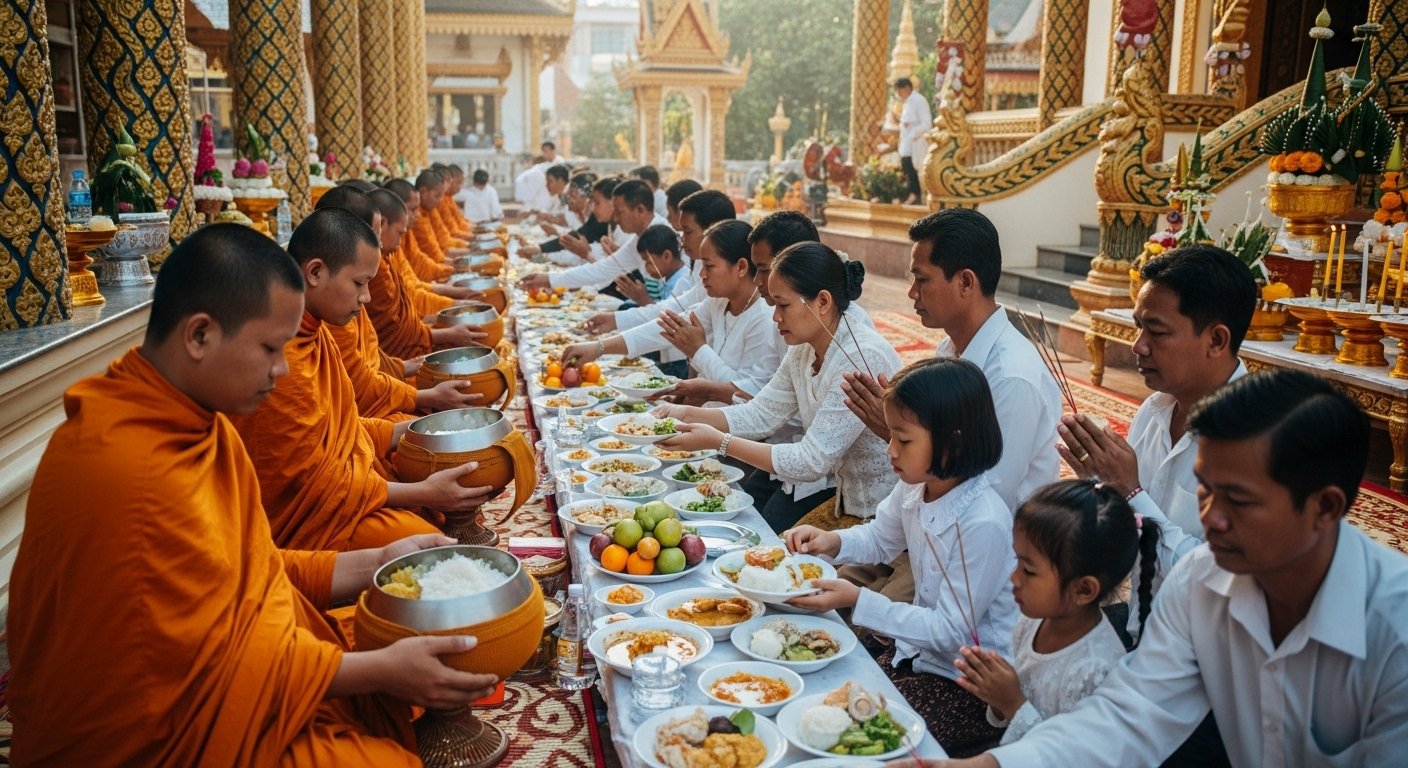
The main purpose of Pchum Ben is to offer food, prayers, and gifts to deceased ancestors, particularly those who may be suffering in the afterlife. Families visit multiple pagodas, known as `wats`, throughout the 15 days. They bring elaborate food offerings for the monks. These offerings help accumulate merit, which is then transferred to the spirits of their ancestors. This ancient tradition reflects the deep spiritual beliefs of Theravada Buddhism in Cambodia. It emphasizes filial piety and the continuity of family ties beyond death. It is one of the most solemn and spiritual Buddhist festivals Cambodia celebrates.
Rituals and Offerings
A unique ritual during Pchum Ben involves throwing `bay ben` (small balls of sticky rice and sesame seeds) onto the ground outside the pagoda. This act is specifically for hungry ghosts, known as `Preta`, who cannot enter the pagoda or receive offerings directly. It is believed that if ancestors do not receive offerings from their living relatives, they may curse them. Therefore, participating in Pchum Ben is a sacred duty for many Cambodians, ensuring peace for both the living and the dead. The atmosphere is one of quiet devotion and community gathering. [6]
4. Royal Ploughing Ceremony (Preah Reach Pithi Chrot Preah Neang Kol): Predicting the Harvest
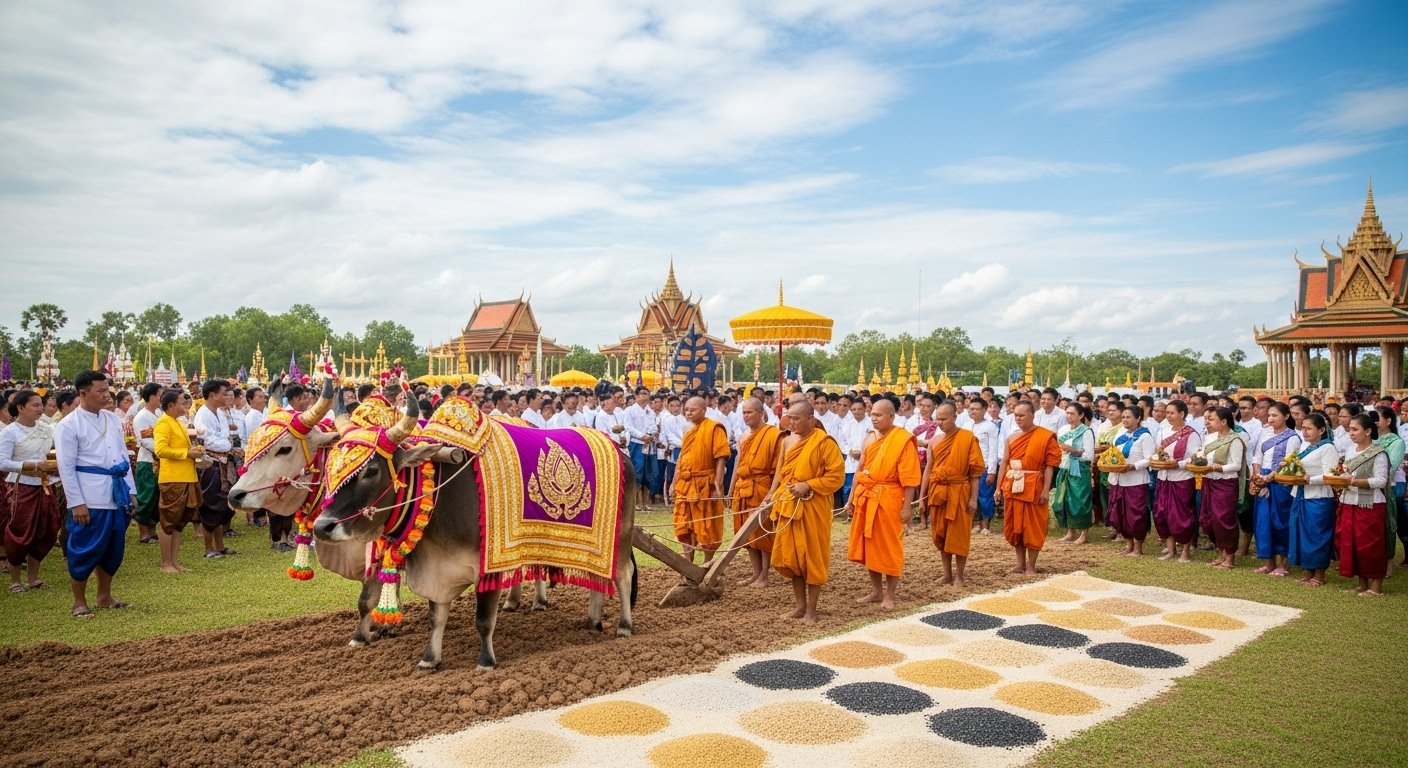
The Royal Ploughing Ceremony, or Preah Reach Pithi Chrot Preah Neang Kol, is an ancient and symbolic event in Cambodia. This traditional Cambodian holiday marks the beginning of the rice-planting season. It highlights the strong connection between the monarchy and the nation’s agrarian society. Typically held in May, the ceremony is steeped in tradition and attended by members of the Royal Family. It is a fascinating insight into Cambodia’s agricultural roots and cultural beliefs. [3]
Ancient Agricultural Rites
During the ceremony, sacred oxen are led to a ceremonial field. They plow a symbolic furrow. Afterward, the oxen are presented with seven plates of different foods and drinks. These typically include rice, corn, beans, sesame seeds, fresh grass, water, and alcohol. The choice of what the oxen eat first is carefully observed. This selection is believed to predict the success of the upcoming harvest and other agricultural fortunes for the year. For instance, if the oxen eat rice, it predicts a good rice harvest. If they drink water, it signifies heavy rainfall.
Symbolic Predictions
The Royal Ploughing Ceremony is not merely a spectacle. It plays a significant role in assuring farmers and the nation about the prosperity of the agricultural season. The predictions influence farmers’ planting decisions and foster a sense of hope. This event reminds everyone of the fundamental importance of agriculture to the Cambodian economy and way of life. It’s a moment of collective anticipation and reverence for the land. Observing this ceremony provides a deep understanding of Cambodia’s rural culture and its reliance on nature.
5. Angkor Sankranta: New Year Festivities at a World Heritage Site
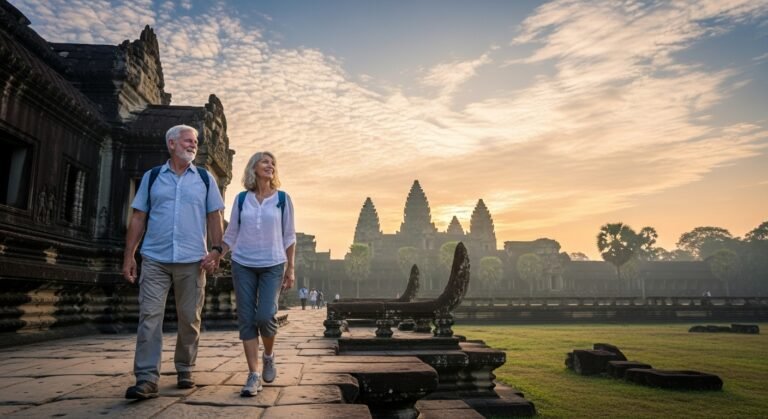
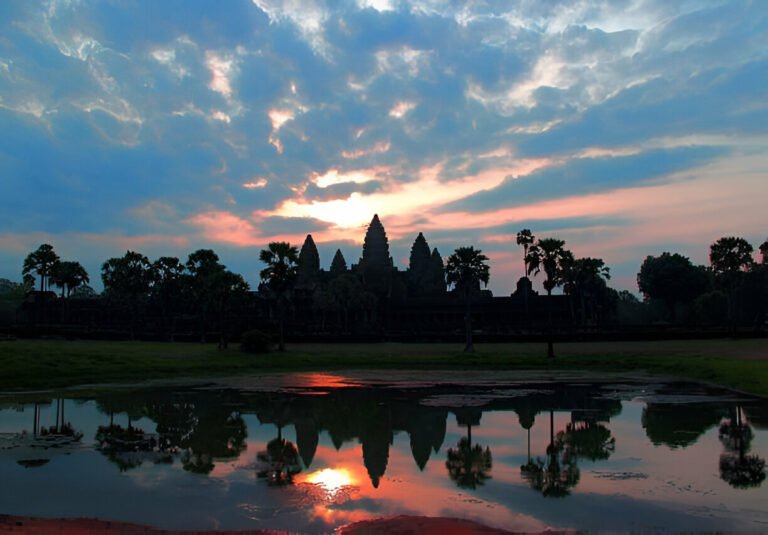
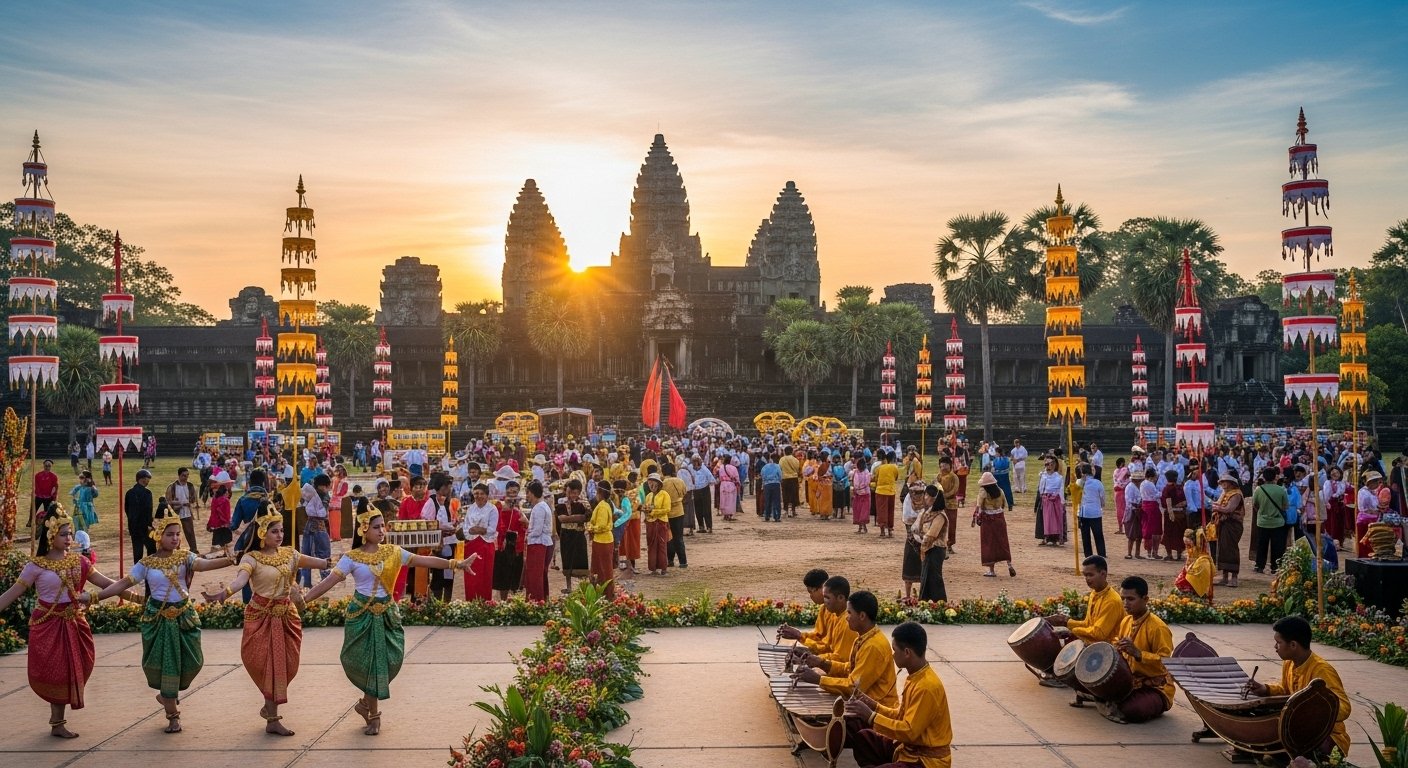
Angkor Sankranta is a relatively newer, yet incredibly popular, addition to the Cambodian holiday calendar. This festival coincides with the Khmer New Year, but it is specifically celebrated within the magnificent grounds of Angkor Wat and other temples in Siem Reap. It transforms the ancient capital into a bustling hub of cultural events and traditional Cambodian festivities. The Angkor Archaeological Park and Koh Ker temple generated over USD 30.3 million from ticket sales to 651,457 international tourists in the first eight months of 2024, marking significant increases in revenue and visitor numbers. [1]
Celebrating at Angkor Wat
The grandeur of Angkor Wat provides an awe-inspiring backdrop for Angkor Sankranta. The festival brings together people from all walks of life to celebrate Cambodian identity. Visitors can enjoy a wide array of activities, including traditional Khmer games like `Chab Kon Kleng` (a game similar to cat and mouse) and `Leak Kanseng` (a cloth-hiding game). There are also vibrant cultural performances, showcasing classical Apsara dance and traditional music. It is a fantastic way to experience both the historical marvel of Angkor and the living culture of Cambodia simultaneously. Festivals in Siem Reap are often a highlight for many travelers.
Cultural Showcases
Angkor Sankranta aims to preserve and promote Khmer culture and traditions. The festival features cooking demonstrations of traditional Cambodian cuisine, art exhibitions, and handicraft markets. You can also witness mass traditional dances and participate in blessings from monks. It’s a dynamic and inclusive event, drawing both locals and international tourists. Things to do during festivals in Cambodia often involve immersive experiences like these, making it a truly unique cultural event. It reinforces national pride and shares Cambodia’s rich heritage with the world.
6. Meak Bochea Day: A Day of Buddhist Observance
Meak Bochea Day is an important Buddhist festival in Cambodia, observed on the full moon day of the third lunar month, usually in February. This sacred day commemorates a pivotal event in the life of the Buddha. It was when 1,250 of his enlightened disciples spontaneously gathered to hear his teachings. This significant assembly took place without any prior arrangement, making it a miraculous and highly revered occasion in Theravada Buddhism. It is a time for deep reflection and spiritual renewal for Cambodian Buddhists. [5]
The Enlightenment Assembly
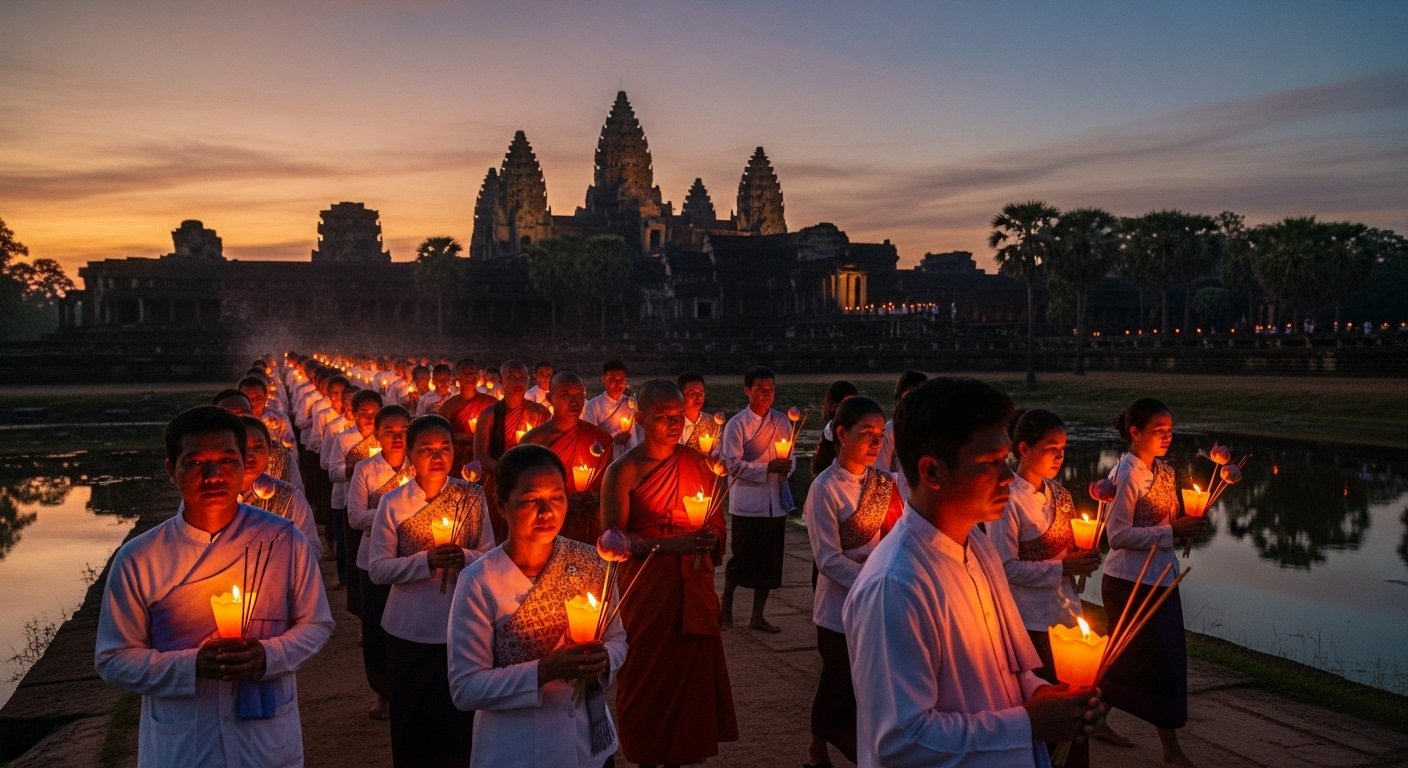
On Meak Bochea Day, Buddhists gather at pagodas across Cambodia to participate in solemn ceremonies. Monks deliver sermons, emphasizing the core principles of Buddhism, such as compassion, patience, and non-violence. Lay practitioners bring offerings of food, flowers, and candles to the temples. This act of giving is believed to generate merit, contributing to good karma. The day encourages followers to reaffirm their commitment to the Buddha’s teachings and live a virtuous life. This observance reflects the serene and profound aspects of Buddhist festivals Cambodia holds dear. [6]
Serene Observances
One of the most beautiful rituals of Meak Bochea is the candlelight procession, known as `Vien Tien`. Participants walk three times around the main temple hall, holding candles, incense, and lotus flowers. Each circumambulation represents one of the Three Jewels of Buddhism: the Buddha, the Dharma (his teachings), and the Sangha (the monastic community). This peaceful procession creates a spiritual and reflective atmosphere. It unites the community in shared devotion. Meak Bochea offers a tranquil yet powerful glimpse into the spiritual heart of Cambodian culture.
7. Sea Festival Cambodia: Celebrating Coastal Beauty
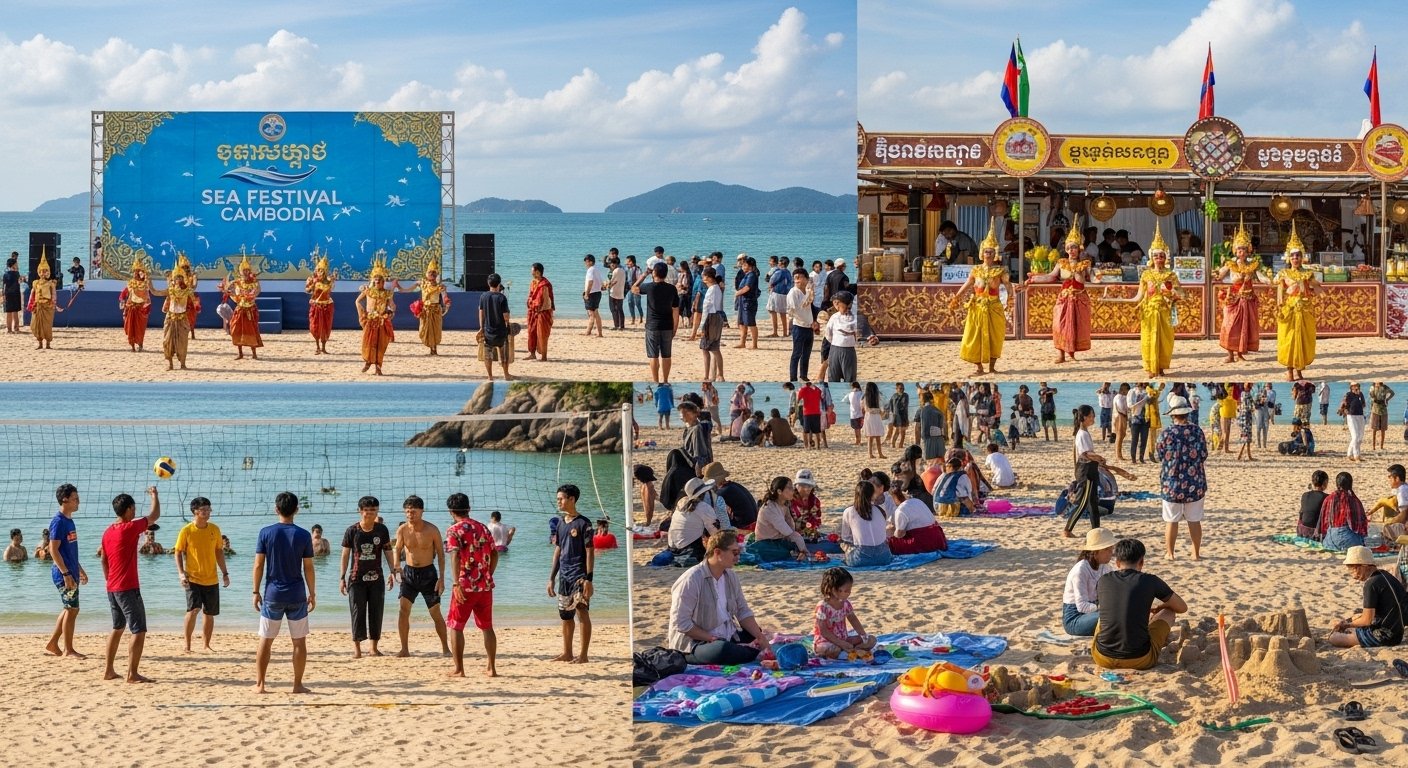
The Sea Festival Cambodia, while a more modern addition to the nation’s event calendar, has quickly become a beloved annual celebration. It focuses on the Kingdom’s beautiful coastline and promotes coastal tourism. This festival rotates among Cambodia’s four coastal provinces: Kep, Kampot, Preah Sihanouk, and Koh Kong. It usually takes place in December, offering a lively and recreational experience. The event combines cultural displays with sports and entertainment, celebrating Cambodia’s marine resources and coastal communities. [5]
Coastal Celebrations
The Sea Festival showcases Cambodia’s stunning beaches and islands. It draws both local and international visitors. Each host province brings its unique flavor to the event, highlighting local products, food, and traditions. You can explore bustling markets offering fresh seafood and regional delicacies. The festival provides an excellent opportunity to relax by the sea while enjoying live music, dance performances, and art exhibitions. It’s a wonderful way to experience the diversity of Cambodian culture beyond the ancient temples. Many consider it a major festival in Cambodia.
Sports and Entertainment
Beyond the cultural showcases, the Sea Festival is a hub for various sports activities. Beach volleyball, football, and traditional Khmer games often feature prominently. There are also water sports competitions, drawing in enthusiastic participants and spectators alike. Evening concerts and fireworks displays illuminate the coastal skies, creating a festive ambiance. This festival is a testament to Cambodia’s growing tourism sector and its commitment to developing diverse attractions. It offers a different kind of immersion into the country’s vibrant event scene.
Conclusion
Cambodian festivals offer a profound and colorful journey into the nation’s soul. From the ancient reverence of Pchum Ben to the exhilarating races of Bon Om Touk, each event provides a unique lens through which to understand Khmer culture. These seven festivals truly represent the major festivals in Cambodia, showcasing the enduring spirit and rich traditions of its people. Planning your visit around these cultural events will undoubtedly enrich your travel experience. You will gain a deeper appreciation for this incredible country. Therefore, start exploring the Cambodian holiday calendar today and prepare for an adventure filled with wonder and discovery. You can plan an unforgettable journey with our first-time Cambodia travel guide ultimate beginners plan. [4]