Preah Vihear Temple Visitor Guide & Tips
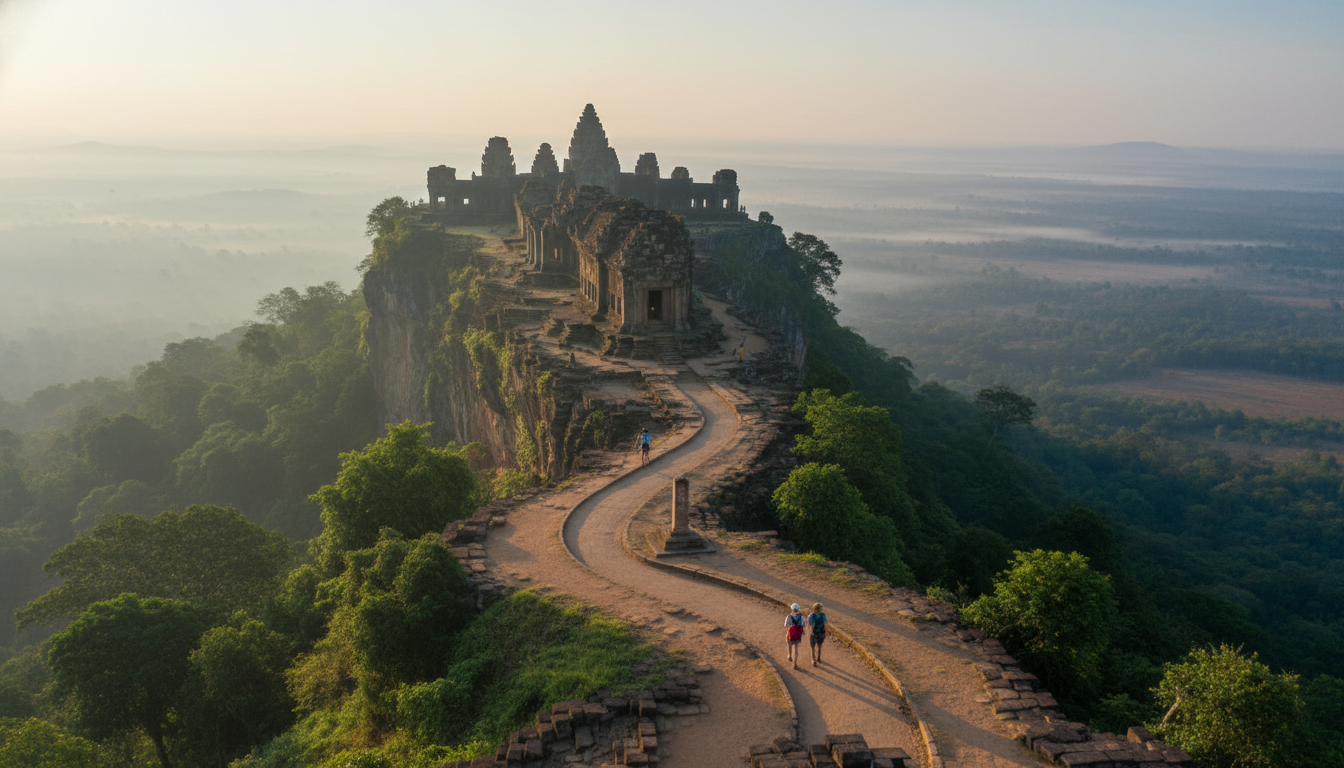
Imagine an ancient temple perched dramatically atop a 525-meter (1,722 ft) cliff, offering breathtaking panoramic views that stretch for miles across the Cambodian plains. This is the awe-inspiring Preah Vihear Temple, a UNESCO World Heritage Site that stands as a testament to the grandeur of the Khmer Empire. For students of history, architecture, and cultural exploration, a Preah Vihear Temple visitor guide is indispensable. This sacred sanctuary, dedicated to the Hindu deity Shiva, is renowned for its unique north-south axis design and intricate carvings. Understanding its historical significance, architectural brilliance, and crucially, the current border situation, is vital for any prospective visitor. In this comprehensive guide, you will learn everything you need to know about planning your visit, from understanding the temple’s past to navigating the current travel landscape and ensuring a safe, enriching experience.
Understanding Preah Vihear Temple: A UNESCO Marvel
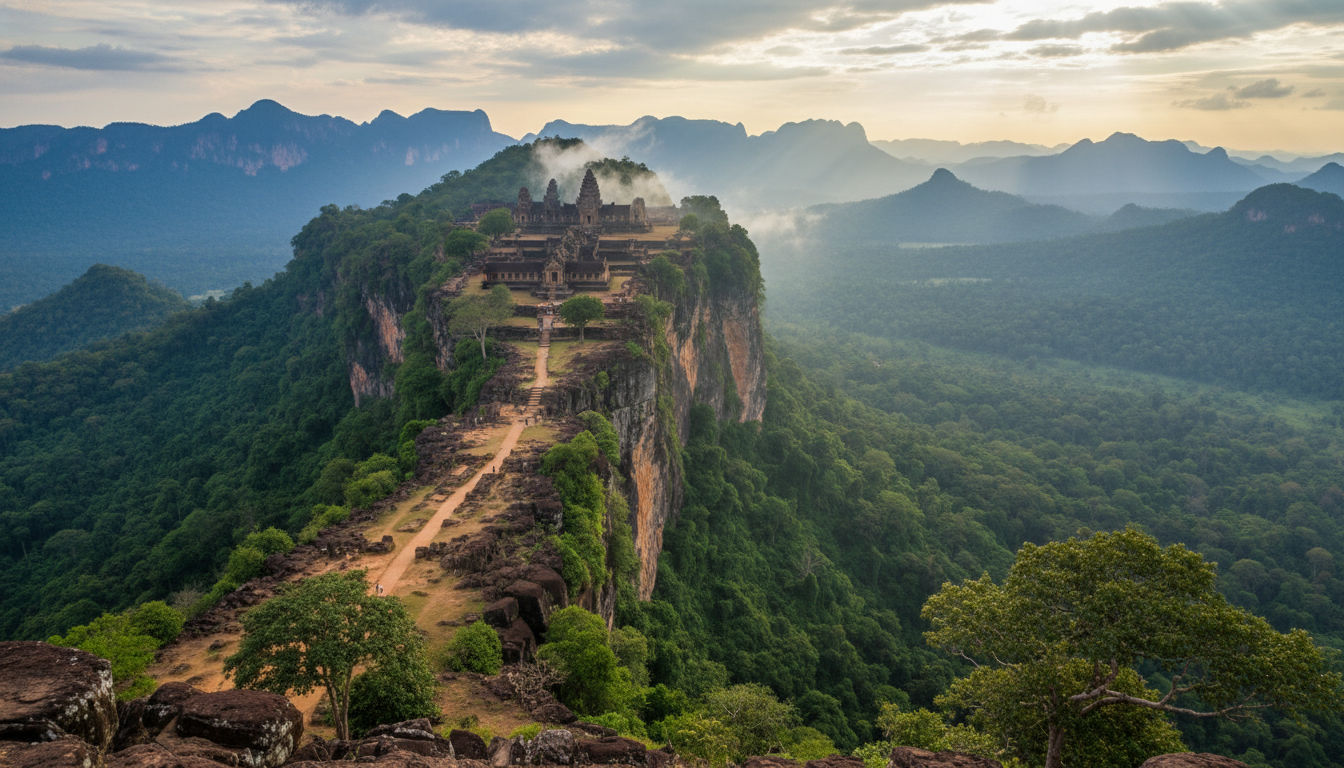
Preah Vihear Temple, known in Khmer as Prasat Preah Vihear, translates to “sacred sanctuary” or “vihāra of the gods”. It is not merely a structure; it is an epic narrative carved in stone, a masterpiece of Khmer architecture and a profound spiritual site. Its inscription as a UNESCO World Heritage Site in 2008 solidified its global importance, recognizing its outstanding universal value. Situated in the Dângrêk Mountains, this temple stands as a symbol of Cambodian heritage and a marvel of ancient engineering.
A Glimpse into its Storied Past
The history of Preah Vihear Temple traces back to the 9th century, with significant construction and modifications spanning several centuries under successive Khmer kings, including Suryavarman I and Suryavarman II. Originally, a hermitage was founded at the site. The temple, primarily dedicated to Shiva, evolved into the intricate complex we see today, showcasing various architectural styles of the Khmer Empire. Its remote location has contributed to its remarkable preservation over time.
Architectural Grandeur in the Dângrêk Mountains
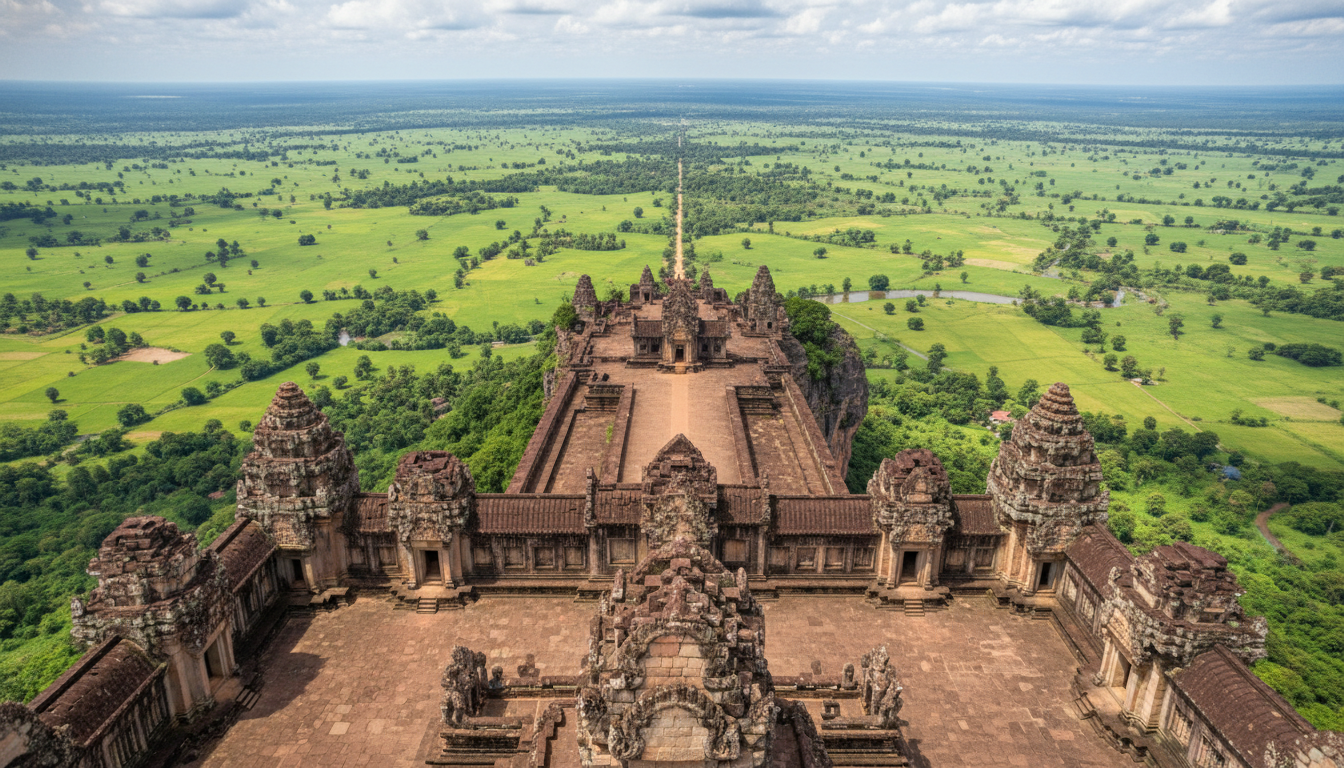
Unlike most Khmer temples that follow a conventional rectangular plan oriented towards the east, Preah Vihear is distinctive for its long north-south axis. The temple complex consists of a series of sanctuaries, connected by an ingenious system of pavements and staircases, stretching over an 800-meter axis. Visitors ascend through five Gopuras (ornate gateways), each progressively leading to the main sanctuary at the highest point of the cliff. These Gopuras are not just entrances; they are integral parts of the temple’s design, offering unique perspectives and architectural details. The carved stone ornamentation throughout the temple is of exceptional quality, reflecting the sophisticated artistry of the Khmer civilization.
Who Owns Preah Vihear Temple? Understanding its International Status
A recurring question for many visitors is, “Who does the Preah Vihear temple belong to?” Despite its complex history and geographical location near the border, the International Court of Justice (ICJ) definitively ruled in 1962 that the temple building belongs to Cambodia. This ruling was reaffirmed by another ICJ decision in 2013, solidifying its status as a Cambodian national treasure. Preah Vihear is undoubtedly a proud UNESCO World Heritage Site within Cambodia’s territory.
Navigating the Border Realities: Safety and Access
Planning a visit to Preah Vihear Temple requires careful consideration of its unique border location. The temple sits atop a cliff in the Dângrêk Mountains, which naturally forms part of the border between Cambodia and Thailand. This proximity has unfortunately led to historical and recent complexities impacting travel to the site. Therefore, staying informed about the current situation is paramount for your safety and travel success.
Is it Safe to Visit Preah Vihear Given its Border Location?
The safety of visiting Preah Vihear Temple is a critical concern for many travelers, especially given its proximity to the Cambodia-Thailand border. As of late 2025 and early 2026, governments strongly advise against all travel to areas within 50 kilometers of the Cambodia-Thailand border. They also recommend reconsidering travel within an additional 30 kilometers (making a total of 80 kilometers) in provinces, including Preah Vihear, due to armed clashes, military strikes, and the continued presence of landmines and unexploded ordnance. The decline in foreign tourist arrivals at Preah Vihear Temple, which dropped by nearly 42.9% in 2025, is attributed to these resuming border clashes. Therefore, while the temple itself is magnificent, current safety advisories suggest extreme caution or deferring travel to this specific border region until the situation stabilizes.
Cambodia-Thailand Border Crossings: Current Status
Historically, visitors could access Preah Vihear from both the Cambodian and Thai sides. However, the situation has dramatically changed. All land border crossings between Thailand and Cambodia have been closed since the end of June 2025 due to ongoing conflict. This includes the Chong Sa Ngam border crossing, which previously served as a key entry point for visitors approaching from Thailand. Consequently, direct access to Preah Vihear Temple from Thailand is currently not possible.
Impact on Local Communities and Tourism
The recent border conflicts have had a devastating impact on the communities surrounding Preah Vihear Temple. Tourist arrivals at the temple fell by a significant 36.2% in 2025, with only 58,154 tourists recorded, including 51,731 domestic and a mere 6,423 foreign visitors. Domestic tourist numbers also declined by 35.2%. This drastic reduction in visitors has led to severe economic hardship. Border communities near Preah Vihear are experiencing substantial revenue loss from cross-border tours, resulting in the closure of approximately 80% of hotels and restaurants in affected areas as of late 2025. This highlights the profound human and economic cost of the ongoing instability.
Planning Your Preah Vihear Temple Visitor Guide: What You Need to Know
Despite the current border challenges, understanding the practical aspects of visiting Preah Vihear remains essential for future travel. When the situation improves, careful planning will ensure a smooth and rewarding experience.
Getting There: How to Access Preah Vihear
Given the current border closures, accessing Preah Vihear Temple is primarily (and currently, exclusively) from within Cambodia. The most common approach, when safe to do so, is from Siem Reap, the gateway to the Angkor temples. The journey involves a long drive, typically 3-5 hours, through the Cambodian countryside to the provincial capital of Sra’aem or directly to the temple entrance. From there, the final ascent to the temple complex usually requires a local motodop (motorcycle taxi) or 4×4 vehicle due to the steep and rugged road leading up the Dângrêk Mountains. This transportation method provides an adventurous element to your Preah Vihear Temple visitor guide. For more general advice on how to travel around Cambodia, consider consulting how to travel around Cambodia.
Best Time to Visit Preah Vihear
The best time to visit Preah Vihear Temple, assuming safe travel conditions, is during Cambodia’s dry season, which runs from November to February. During these months, the weather is cooler and drier, making the long journey and the climb up to the temple more comfortable. You will experience clear skies, offering unobstructed views of the surrounding plains. Conversely, the rainy season (May to October) can make roads muddy and challenging, and the heat and humidity of the hot season (March to May) can be intense. Always check local weather forecasts and, more importantly, current safety advisories before planning your trip.
Entrance Fees and Visiting Hours
Typically, there is a Preah Vihear Temple entrance fee for foreign visitors. While prices can vary, it is generally around $10 USD. There might be additional charges for the local transportation required to ascend the mountain (motodop or 4×4 taxi). Visiting hours usually run from early morning until late afternoon, allowing ample time to explore the complex. It is always wise to confirm the most up-to-date fees and hours upon arrival or through official Cambodian tourism channels once travel advisories are lifted. Remember to carry local currency (Cambodian Riel or USD) for these expenses.
Cambodia Visa Requirements
Before embarking on your journey to Preah Vihear or any part of Cambodia, ensure you have the correct visa. Most foreign nationals require a visa to enter Cambodia. Options often include obtaining a visa on arrival at international airports or land borders (when open), an e-Visa online, or a visa from a Cambodian embassy or consulate in advance. For a detailed breakdown of the process and requirements, you can find a comprehensive resource here: how to get a Cambodia visa.
Exploring the Temple Complex: What to See and Do
Once it is safe to visit, exploring Preah Vihear Temple offers an unparalleled journey through history and stunning landscapes. The temple’s unique layout and cliffside location provide a distinct experience compared to other Khmer sites.
The Ascent to the Sanctuary
The approach to Preah Vihear is an integral part of the experience. The path leads upwards, with a series of grand processional ways and steep staircases connecting the various levels of the temple. This architectural design perfectly integrates the structure with its natural surroundings, making the climb itself a journey of discovery. The vistas become increasingly dramatic with each ascent, culminating in the breathtaking views from the main sanctuary.
The Five Gopuras and Their Significance
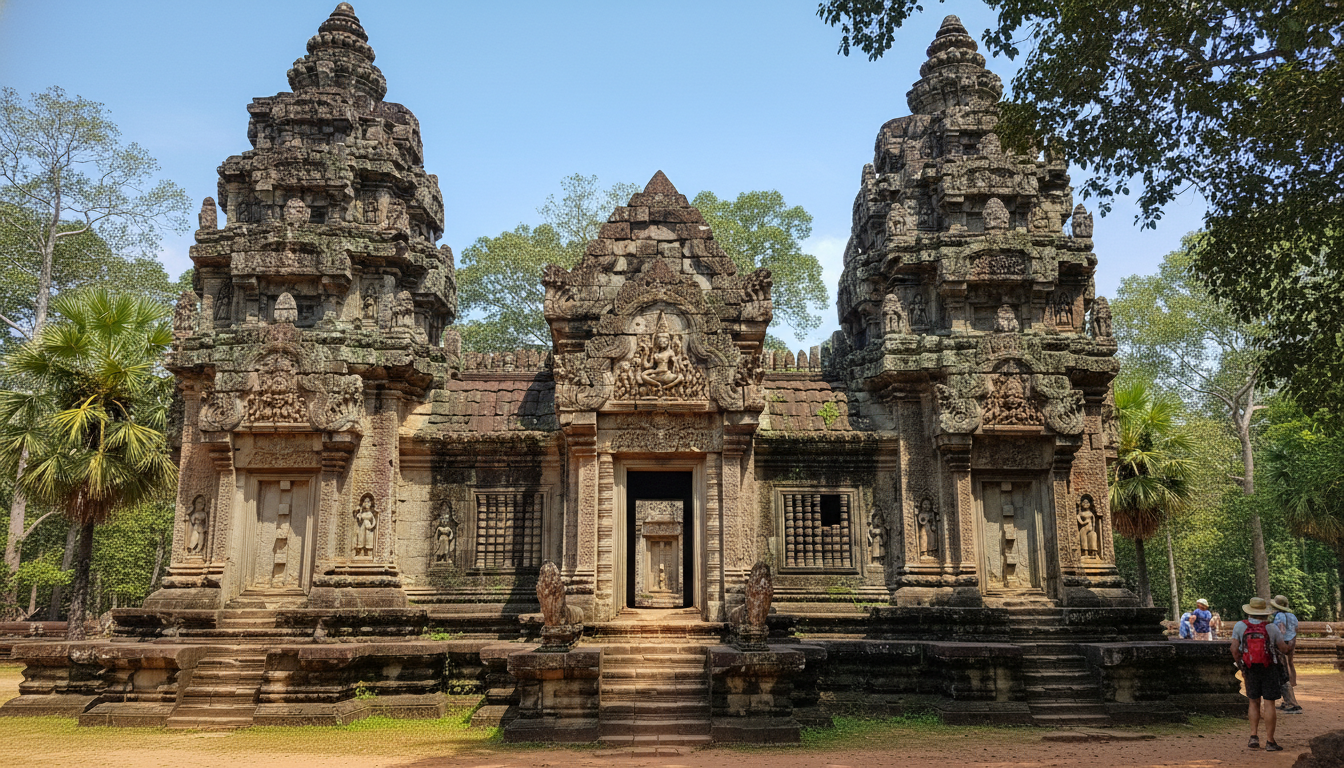
As you navigate the temple, you will encounter five distinct Gopuras. These gateways are not just entry points; they are richly decorated with intricate carvings, including depictions of Hindu mythology and Apsara dancers. Each Gopura marks a progression, both physically and spiritually, towards the most sacred inner sanctum. Take time to appreciate the detailed bas-reliefs and the ingenious way these structures frame the subsequent sections of the temple, offering glimpses of what lies ahead.
Experiencing the Temple Complex: What is the Best Way?
To truly appreciate Preah Vihear Temple, dedicate at least 2-3 hours to explore the complex thoroughly. The best way to experience it is to take your time, walk through each Gopura, and soak in the atmosphere. From the first Gopura, you begin a fascinating architectural journey. Ascend slowly, allowing yourself to pause and admire the carvings, the crumbling galleries, and the strategic placement of each structure. The temple’s north-south axis guides your path, leading you eventually to the main sanctuary at the summit. Don’t rush; the panoramic views from the top are a highlight. Also, remember that this is a sacred site. Dress modestly, covering shoulders and knees, similar to the Angkor Wat dress code guide. Respectful behavior is always appreciated.
Are There Guided Tours Available?
Yes, guided tours are generally available at Preah Vihear, and they are highly recommended. Hiring a local guide or booking a Preah Vihear tour package can significantly enhance your understanding of the temple’s history, architecture, and cultural significance. Guides can point out intricate details you might otherwise miss and provide context to the various carvings and structures. While the general safety advisories are in effect, any available tour packages or guides would operate under strict safety protocols. Always ensure any tour operator is reputable and knowledgeable about local conditions.
Beyond the Temple: Nearby Attractions and Accommodation
While Preah Vihear Temple is the undeniable highlight of the region, the surrounding province also offers other points of interest. However, current travel restrictions and safety advisories must be considered before planning any exploration beyond the temple itself.
Discovering Koh Ker and Other Historical Sites
If you are traveling from Siem Reap, you might consider visiting Koh Ker, another ancient Khmer capital and archaeological site, on your way to or from Preah Vihear. Koh Ker is less visited than Angkor Wat but boasts impressive pyramid temples and unique sanctuaries, offering a different perspective on Khmer architecture. The Preah Vihear province itself is home to other ancient sites, such as Noreay Temples and Wat Peung Preah Ko. However, always prioritize safety and consult current travel advisories for these more remote locations.
Accommodation Near Preah Vihear
Historically, there were a few guesthouses and a Preah Vihear Boutique Hotel or similar establishments in Sra’aem, the closest town to the temple, offering basic to mid-range accommodation. These options catered to visitors wishing to spend a night closer to the temple. However, with the significant decline in tourism and the closure of 80% of hotels and restaurants in affected border areas as of late 2025, finding accommodation directly near Preah Vihear may be extremely challenging or impossible. If and when travel safely resumes, checking current availability and booking well in advance would be crucial. Alternatively, most visitors would base themselves in Siem Reap and undertake Preah Vihear as a day trip.
Preah Vihear Temple is an extraordinary UNESCO World Heritage Site, offering a captivating blend of history, architectural brilliance, and dramatic natural beauty. It serves as a powerful symbol of the Khmer Empire’s legacy and Cambodia’s rich cultural heritage. While the temple’s allure is undeniable, prospective visitors must prioritize safety and remain fully informed about the current travel advisories concerning the Cambodia-Thailand border region. The recent border clashes and associated travel warnings highlight the importance of exercising extreme caution. Until conditions stabilize, it is prudent to defer travel to areas within 80 kilometers of the border. When the time is right, and with diligent planning and respect for local conditions, exploring this magnificent “vihāra of the gods” promises an unforgettable and deeply enriching experience.
Frequently Asked Questions
What is Preah Vihear Temple?
Preah Vihear Temple is an ancient Hindu temple built by the Khmer Empire atop a 525-meter cliff in Cambodia’s Dângrêk Mountains. Dedicated to Shiva, it is renowned for its unique north-south axial design and exquisite Khmer architecture, earning it UNESCO World Heritage Site status in 2008.
Is Preah Vihear Temple safe to visit right now?
As of late 2025 and early 2026, governments advise against all travel to areas within 50 kilometers of the Cambodia-Thailand border and recommend reconsidering travel within an additional 30 kilometers (total 80 kilometers) in provinces like Preah Vihear, due to armed clashes, military strikes, and landmines. All land border crossings between Thailand and Cambodia have been closed since June 2025.
How much is the Preah Vihear Temple entrance fee?
Historically, the Preah Vihear Temple entrance fee for foreign visitors has been around $10 USD. There are often additional charges for local transportation (motodop or 4×4) required for the steep ascent to the temple. Always verify current fees with local authorities or reputable tour operators when travel is safe to resume.
What is the best time to visit Preah Vihear Temple?
The ideal time to visit Preah Vihear Temple, when safety permits, is during Cambodia’s dry season, from November to February. These months offer cooler temperatures, lower humidity, and clear skies, making the journey and exploration of the temple complex more comfortable and enjoyable.
How do I get to Preah Vihear Temple?
Currently, access to Preah Vihear Temple is solely from within Cambodia, typically from Siem Reap. This involves a several-hour drive to the temple’s base, followed by a necessary transfer to a local motodop or 4×4 vehicle for the steep climb up the mountain. Direct access from Thailand is not currently possible due to border closures.