Eat Like a Local: Your Guide to Cambodia Street Food
Imagine a country where the aroma of grilled meats, aromatic spices, and sweet, sticky rice fills the air, drawing you into a vibrant culinary scene. Welcome to Cambodia, a land rich in history and bursting with incredible flavors. The Kingdom of Cambodia is quickly becoming a top destination for travelers, with approximately 6.7 million international visitors in 2024, marking a significant 22.9% increase from 2023. This surge in tourism has greatly boosted the demand for diverse dining experiences, especially traditional Cambodian cuisine. For many, the true heart of Cambodian gastronomy lies not in upscale restaurants, but in its bustling street food stalls. Here, you’ll find authentic Cambodian food that tells a story, offering a delicious and affordable glimpse into local life. This comprehensive guide will take you on a mouth-watering journey through the top 10 must-try Cambodia street food dishes, ensuring you eat like a local and savor every moment of your adventure.
What is the most popular street food in Cambodia? There isn’t just one answer, as the country boasts a diverse array of beloved dishes! However, some stand out as absolute essentials. The Cambodian foodservice market reached an impressive USD 2.91 billion in 2025 and is projected to grow to USD 4.52 billion by 2030, showing a strong compound annual growth rate (CAGR) of 9.20%. Traditional Cambodian fare captured a significant 42.12% of this spending in 2024, highlighting its enduring popularity among both locals and visitors. Street food carts remain incredibly popular because of their affordability and convenience; most items typically cost between USD 0.50 and USD 2. This guide focuses on those iconic dishes that define Cambodian street food, offering a blend of savory, sweet, and unique flavors.
Why Explore Cambodia Street Food? A Culinary Adventure Awaits!
Diving into the local street food scene is more than just eating; it’s an immersive cultural experience. Street food offers a genuine taste of Khmer cuisine, which has a nearly two-thousand-year-old culinary tradition. Influences from India, China, France, and neighboring Southeast Asian countries have shaped its unique flavor profile. You will discover dishes that are often less spicy than Thai food but are rich with fresh herbs and distinct aromatics. Moreover, exploring street food helps you connect with local vendors and witness the daily rhythm of Cambodian life. It’s an affordable way to enjoy high-quality, authentic meals.
Is Cambodian Street Food Safe to Eat?
Many travelers wonder about the safety of street food. Generally, Cambodian street food is safe to eat, provided you follow a few sensible precautions. Opt for stalls that are busy with locals, as a high turnover of food means freshness. Watch how the food is prepared; look for clean cooking surfaces and utensils. Hot, freshly cooked food is always the safest bet. It is also wise to drink bottled water and avoid ice unless you are sure it’s made from purified water. By being mindful, you can confidently enjoy the culinary delights without worry.
What Food is Cambodia Known For? Unveiling the Top 10 Cambodia Street Food Delights
Cambodia is known for its incredible flavors, often featuring fresh fish, rice, and aromatic spices. The country’s street food scene is a testament to its rich culinary heritage. Here are the top 10 Cambodia street food dishes that you absolutely must try:
1. Nom Banh Chok (Khmer Noodles)
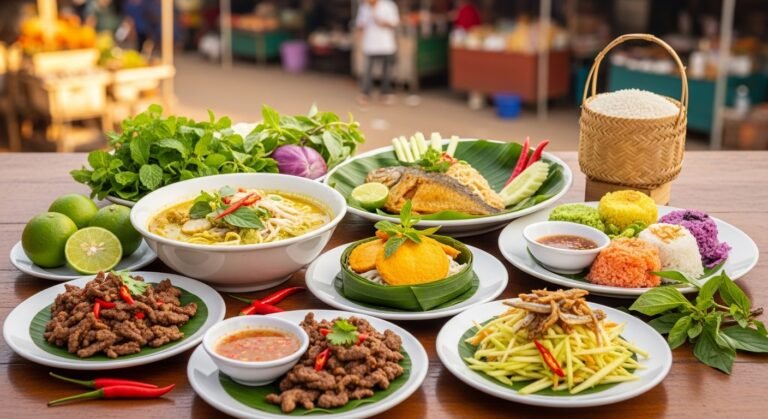
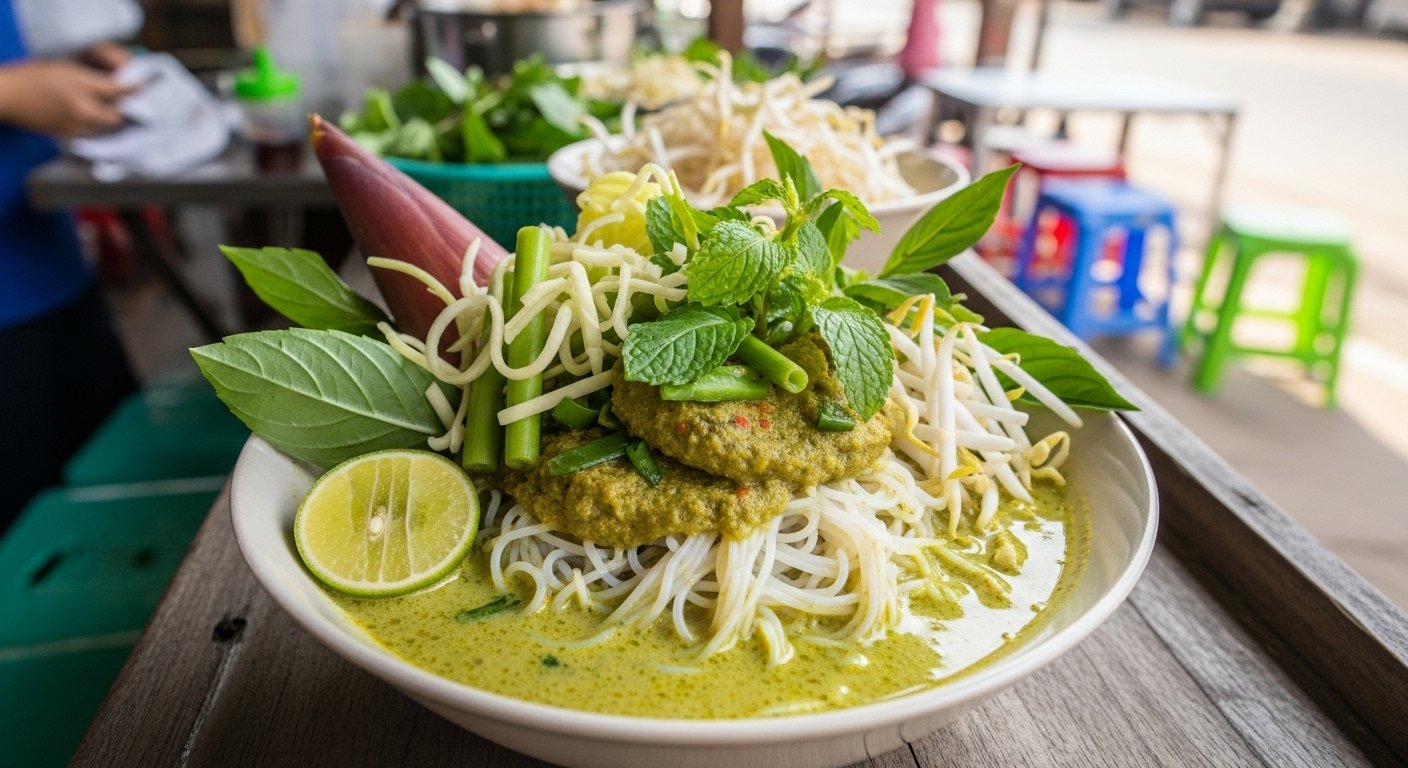
Nom Banh Chok is often considered a staple and a must-try for any visitor. This refreshing dish is a traditional Cambodian breakfast, but locals enjoy it throughout the day. It features delicate rice vermicelli noodles, often freshly made, generously topped with a fish-based green curry gravy. This gravy, called *samlor*, is typically made with lemongrass, turmeric, and kroeung (a Cambodian spice paste). Fresh mint, basil, banana flowers, cucumbers, and other vibrant vegetables accompany the noodles, adding texture and aroma. The light, herbal broth and fresh ingredients make it a truly invigorating meal. Many consider it the national dish, alongside Fish Amok. Finding Nom Banh Chok is easy; look for vendors with large baskets of fresh herbs and noodles, especially in the mornings. You can explore more about local dishes in Phnom Penh by checking out our Phnom Penh foodie guide.
2. Bai Sach Chrouk (Pork and Rice)
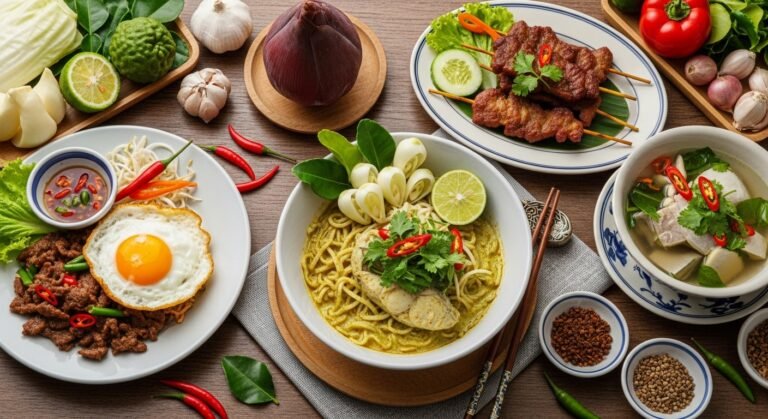
For a truly traditional Cambodian breakfast, Bai Sach Chrouk is king. This simple yet incredibly flavorful dish consists of thinly sliced, marinated pork, often grilled over charcoal, served over broken rice. The pork is typically marinated in coconut milk or a sweet, savory sauce, giving it a slightly caramelized exterior. It often comes with a side of pickled cucumbers and daikon radish, a fried egg, and a small bowl of clear chicken broth, adding a perfect balance of flavors and textures. It’s a comforting and hearty start to the day, widely available from morning street vendors across Cambodia, especially in Phnom Penh.
3. Fish Amok
Often hailed as Cambodia’s national dish, Fish Amok is a rich and creamy fish curry steamed in banana leaves. It’s a fragrant masterpiece made with fresh freshwater fish (often snakehead fish), coconut milk, kroeung paste, and noni leaves. The dish has a delicate, mousse-like texture and a complex flavor that is savory, slightly sweet, and aromatic. While often found in restaurants, some street food vendors and market stalls offer smaller, more accessible portions. It’s a quintessential dish that showcases the depth of Khmer cuisine. To understand more about the historical influences on such dishes, Wikipedia offers excellent insights into Cambodian cuisine.
4. Kuy Teav (Noodle Soup)
Kuy Teav is a beloved noodle soup that rivals Nom Banh Chok in popularity, especially for breakfast. This savory broth-based dish features thin rice noodles, pork broth, and an assortment of toppings like sliced pork, pork belly, pork meatballs, shrimp, or fish balls. Fresh herbs, bean sprouts, and fried garlic are added for extra flavor and crunch. Vendors customize each bowl to your preference. This comforting and aromatic soup is a staple throughout the country, and you’ll find numerous stalls specializing in Kuy Teav in cities like Phnom Penh and Siem Reap. It’s also an excellent choice for a hearty lunch.
5. Lort Cha (Stir-fried Short Noodles)
Lort Cha is a popular stir-fried dish made with short, thick rice noodles. These chewy noodles are wok-fried with beef, broccoli, bean sprouts, chives, and a sweet, savory soy-based sauce. Crucially, it’s always topped with a perfectly fried egg, its runny yolk adding richness to the dish. Often served with a side of chili sauce, Lort Cha offers a satisfying combination of textures and flavors. It’s a quick and easy street food meal, perfect for a casual lunch or dinner. This dish demonstrates the influence of Chinese cuisine on Cambodian foodways.
6. Num Pang (Cambodian Sandwich)
Thanks to French colonial influence, baguettes are widely available in Cambodia, giving rise to the delicious Num Pang. Similar to Vietnamese *Banh Mi*, this Cambodian sandwich features a crispy baguette filled with various savory ingredients. Common fillings include grilled meats (often pork or chicken), pate, pickled vegetables, fresh herbs, and a smear of mayonnaise or chili sauce. It’s a convenient and filling snack or light meal that you’ll find at many street stalls and roadside carts. Num Pang offers a fantastic fusion of Cambodian and French culinary traditions. For more unique food experiences in Phnom Penh, look for these popular sandwich carts.
7. Ang Dtray-Meuk (Grilled Squid)
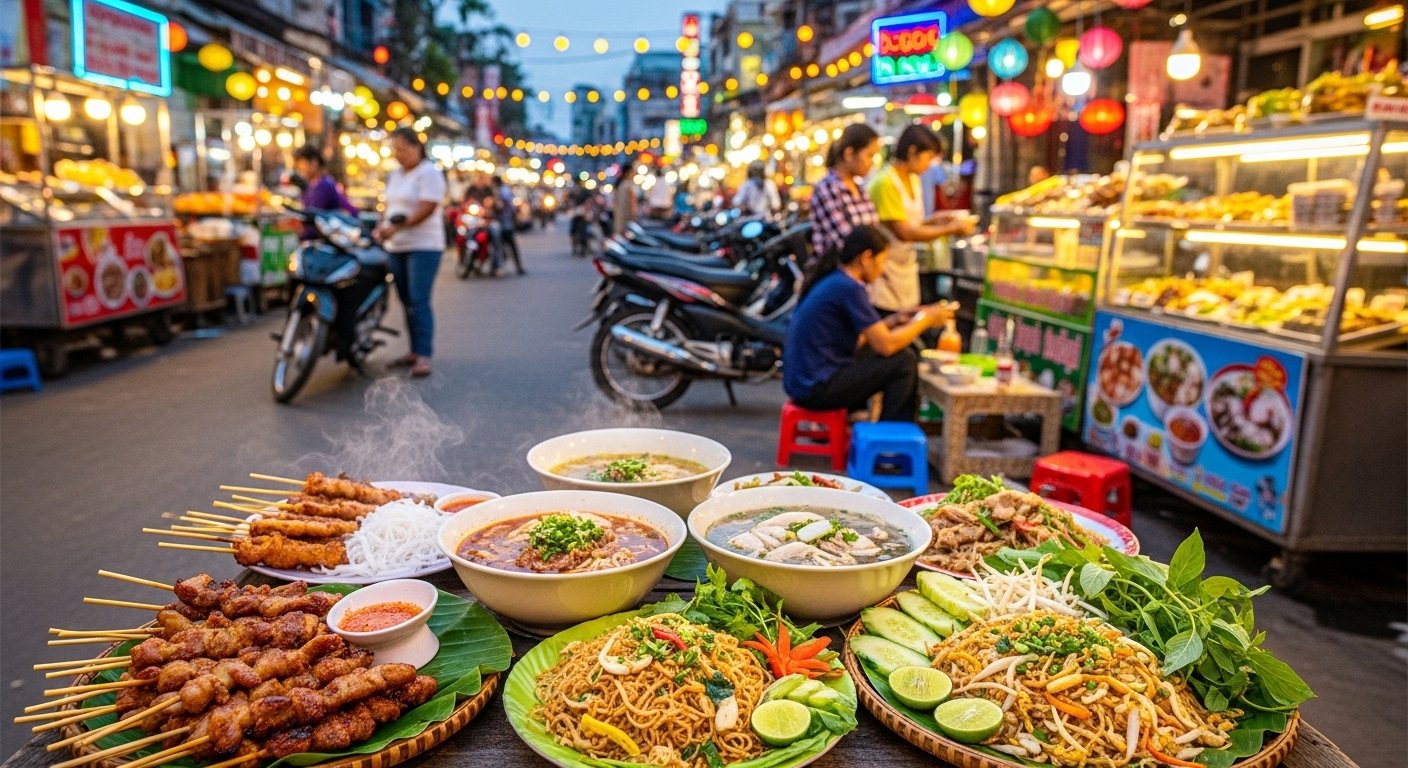
For seafood lovers, Ang Dtray-Meuk, or grilled squid, is an absolute must-try. Fresh squid is marinated in a mixture of fish sauce, garlic, chili, and often palm sugar, then skewered and grilled over hot coals. The result is tender, smoky, and slightly sweet squid, often served with a tangy dipping sauce made from lime juice, black pepper, and chili. This popular snack is especially prevalent in coastal areas and night markets, including those in Siem Reap, where the aroma of grilling seafood is irresistible. The abundance of fresh seafood from the Mekong River and Tonlé Sap contributes to Cambodia’s rich fish and seafood dishes.
8. Num Kachay (Chive Cakes)
Num Kachay, or chive cakes, are savory, pan-fried delights perfect for a quick snack. These glutinous rice flour cakes are studded with fresh chives, giving them a distinct oniony flavor. They are fried until golden and crispy on the outside, while remaining soft and chewy on the inside. Often served with a sweet and spicy fish sauce dipping sauce, Num Kachay is a simple yet addictive street food. You’ll often see these being freshly prepared in large batches by street vendors, especially in busy market areas. To explore more markets, you can read our guide on 6 markets to explore Cambodia.
9. Kralan (Sticky Rice in Bamboo)
Kralan is a unique and traditional Cambodian dessert street food. Sweet sticky rice, often mixed with coconut milk, black beans, and sometimes taro or pumpkin, is packed into bamboo sticks. These bamboo tubes are then slowly roasted over an open fire, infusing the rice with a delicate smoky flavor and creating a wonderfully creamy texture. The bamboo is peeled away just before eating, revealing the fragrant and delicious sticky rice inside. Kralan is a popular snack, especially during festivals, and you’ll find it sold by vendors along roadsides and in markets. It’s a truly authentic local food Cambodia experience.
10. Cambodian Desserts Street Food (Skoo Thean, Nom Korng & More)
Cambodian desserts street food offers a sweet ending to any culinary adventure. Beyond Kralan, you’ll discover a variety of delightful treats. Skoo Thean, a popular option, consists of palm fruit, sticky rice, and coconut cream, often served chilled. Nom Korng are small, circular donuts, often fried until golden and then coated in palm sugar syrup. Many vendors offer an assortment of colorful jellies, fresh tropical fruits (like mangoes, papayas, and rambutan), and sweet soups made with coconut milk and various ingredients. Keep an eye out for these sweet surprises that perfectly embody the creativity of Cambodian street food. You can find more about travel and local foods in Cambodia here: travel cambodia 10 must-try local foods.
Navigating the Bustling Street Food Scene: Tips for a Safe and Enjoyable Experience
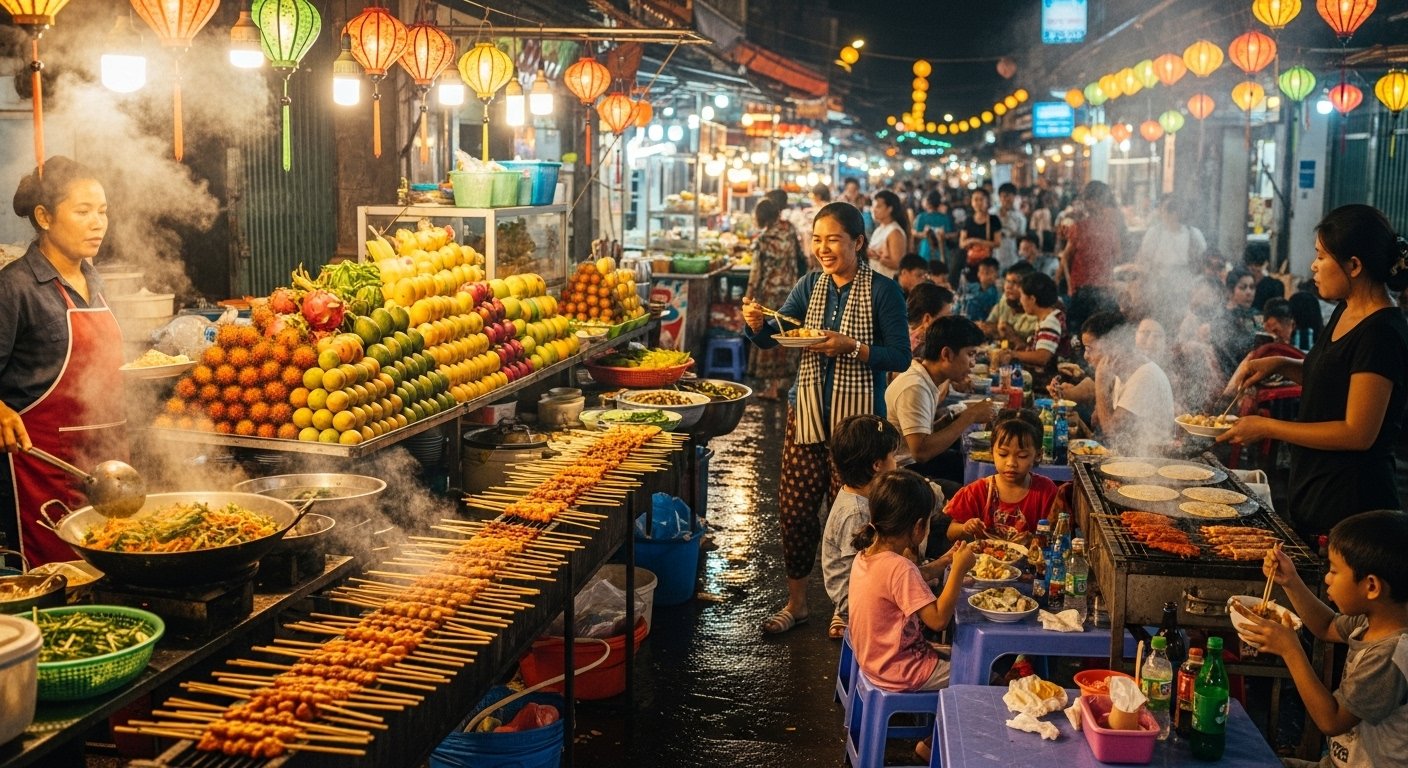
To truly enjoy your Cambodia street food experience, a little preparation goes a long way. Beyond choosing busy stalls, there are other considerations. Always carry hand sanitizer, as eating with your hands is common for some dishes. Be aware of your surroundings, especially in crowded night markets. Learning a few basic Khmer phrases like ‘chnganh’ (delicious!) can also enhance your interactions with local vendors. Remember, the goal is to embrace the local culture and savor the flavors, so a positive attitude is key!
What Should I Avoid When Trying Street Food in Siem Reap?
When in Siem Reap or any other part of Cambodia, it’s generally advisable to avoid uncooked or unpeeled fruits and vegetables if you’re concerned about water quality. Similarly, be cautious with dishes containing raw or undercooked meats or seafood. While adventurous eaters might try insect delicacies, it’s best to stick to well-known and freshly cooked items first. Prioritize hygiene and observe local practices. Also, be wary of overly touristy areas where food quality might be compromised for speed, and seek out authentic spots where locals genuinely eat.
Exploring Local Street Food Hotspots: Phnom Penh and Siem Reap
Both Phnom Penh and Siem Reap offer incredible opportunities to sample the best street food Cambodia has to offer. These cities are hubs for authentic Cambodian food. In Phnom Penh, some of the best street food can be found around the Central Market (Phsar Thmei) and Russian Market (Phsar Toul Tom Poung), particularly for breakfast items like Bai Sach Chrouk and Nom Banh Chok. Riverside areas also teem with vendors in the evenings. These locations are excellent for a Phnom Penh street food tour, allowing you to sample a wide variety of dishes.
Siem Reap, famous for its Angkor Wat temples, boasts vibrant night markets and street food alleys, especially around Pub Street and the Old Market area. Here, you’ll find an abundance of grilled meats, stir-fried noodles, and various snacks. Exploring these Siem Reap street food areas is an integral part of the visitor experience, providing insights into local life beyond the ancient ruins. Many stalls stay open late into the night, offering a lively atmosphere.
What are the must-try foods in Phnom Penh? Beyond the main list, consider trying *Nom Korng* for a sweet treat or *Skoo Thean* for a refreshing dessert. For main meals, *Kuy Teav* is a fantastic choice for any time of day, and you can easily find good street food in Phnom Penh by simply following the crowds of locals. Unique food experiences in Phnom Penh often involve discovering a small family-run stall that has perfected a single dish over generations. Don’t be afraid to wander and try new things!
Key Takeaways
- Cambodia’s street food offers an affordable and authentic culinary journey into Khmer culture.
- Prioritize busy, clean stalls and freshly cooked food for a safe eating experience.
- Must-try dishes include Nom Banh Chok, Bai Sach Chrouk, Fish Amok, and Kuy Teav.
- Phnom Penh and Siem Reap are prime locations for exploring diverse street food options.
- Embrace local customs and flavors to truly enjoy the vibrant street food scene.
Conclusion: Savoring the Flavors of Cambodia
Embarking on a culinary adventure through Cambodia’s street food scene is an unforgettable experience. From the refreshing Nom Banh Chok to the savory Bai Sach Chrouk and the delicate Fish Amok, each dish offers a unique insight into the country’s rich culinary traditions. The affordability, convenience, and vibrant atmosphere of street food stalls provide an unparalleled opportunity to connect with local culture and taste authentic Cambodian food. With a little adventurous spirit and these helpful tips, you’re ready to navigate the bustling markets and discover your new favorite Cambodian street food. So, grab a fork (or your chopsticks!), embrace the aromas, and prepare for a delicious journey!